Current Trends in Farm Diversification: What Works Well Together — and Can You Have Too Much
Diversification is no longer a side conversation in farming.
For many rural businesses, diversification has become part of a much bigger conversation about the future.
We're increasingly seeing the next generation return to the farm having spent time elsewhere, working in business, hospitality, marketing, finance, technology and countless other industries. They often come back with fresh ideas, different perspectives and an excitement to build something of their own.
Far from being a threat to traditional farming, these ideas can become one of the farm's greatest assets. When combined with the experience, knowledge and values of previous generations, they can create opportunities that strengthen both the business and the future of the farm itself.
Some of the most exciting diversification stories begin when fresh thinking meets farming roots. But as more farms look beyond traditional income streams, another question starts to appear.
What actually works well together? And can a farming business diversify too much?
Because diversification should never be about collecting random businesses and hoping something sticks. The strongest diversified farms usually have one thing in common, that is the different parts of the business make sense together.
- They share customers
- They share buildings
- They share land
- They share staff, machinery, skills or location
- And most importantly, they support the long-term future of the farm rather than pulling it in too many directions at once.
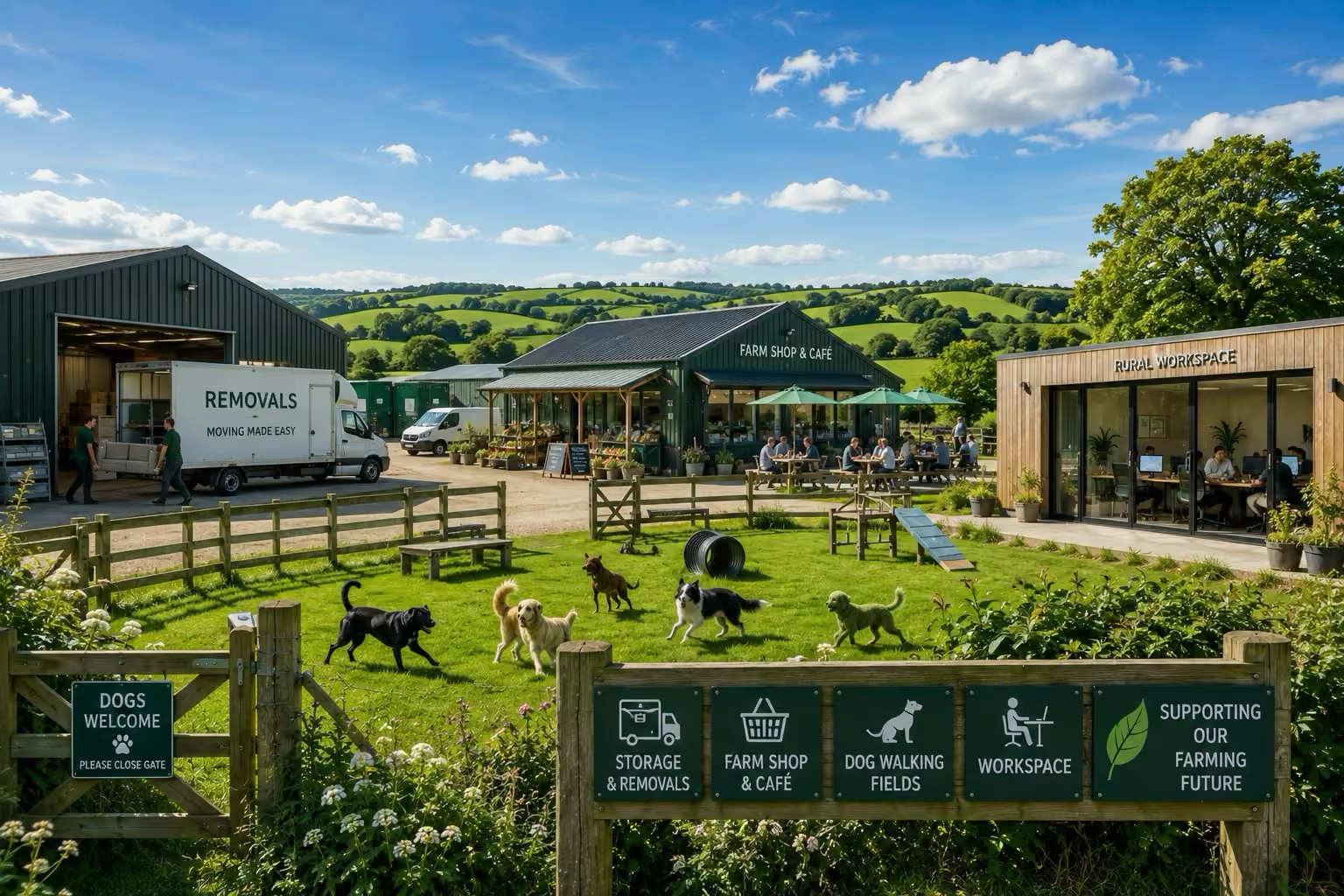
Take storage and removals, for example.
On paper, they are two separate businesses. But in reality, they fit together incredibly well.
A removals customer may need somewhere to store furniture if there is a delay in their move, if they are downsizing, renovating, waiting for a house completion, or simply not ready to move everything straight away.
Storage then becomes a natural extension of the removals service.
And for farms, storage can also make very practical sense. Many farms already have large buildings, good access, space for vehicles and a location that can serve surrounding towns and villages. That doesn’t mean every shed should automatically become self-storage. But it does show what good diversification looks like when the pieces fit.
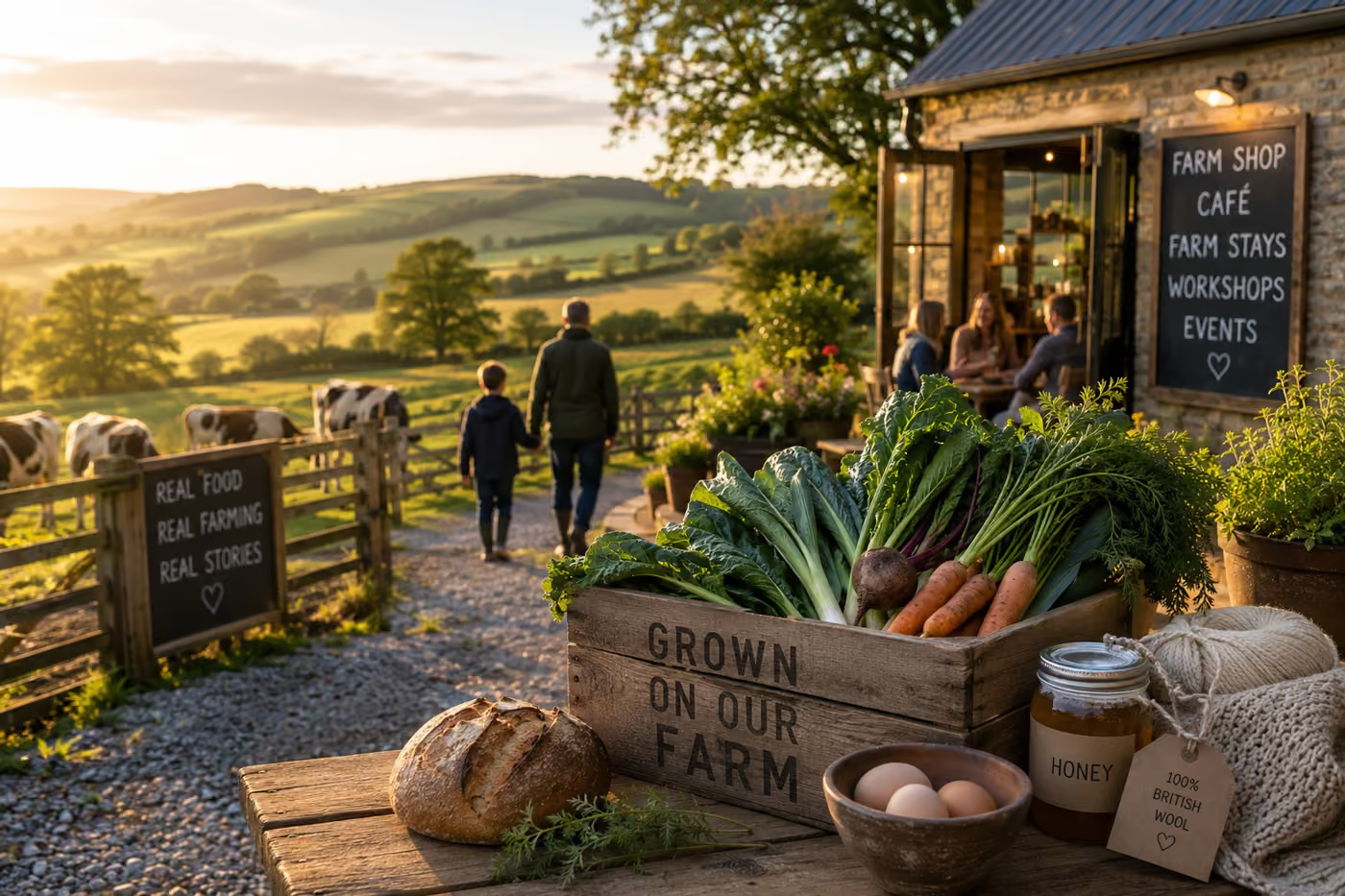
The same can be true of farm shops, cafés and experiences.
- A farm shop brings people onto the site
- A café gives them a reason to stay longer
- Events, workshops, trails or seasonal activities can build on that same visitor base.
Each part supports the next.
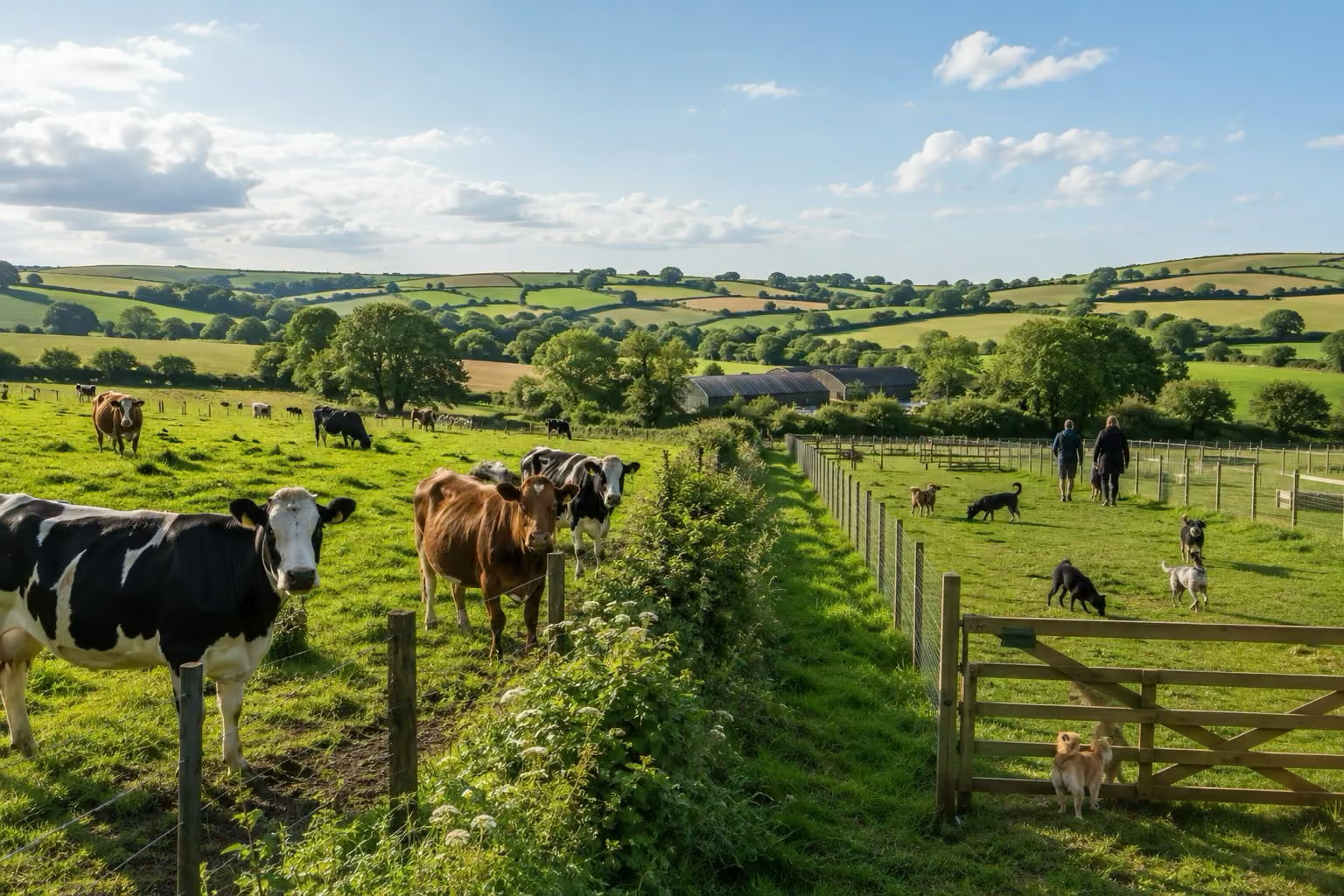
Dog walking fields are another example.
They use land in a relatively low-impact way, can attract regular local customers and, when positioned well, can sit alongside other rural businesses without overwhelming the core farming operation.
Commercial workspace can also work well on farms, particularly where redundant buildings can be converted into offices, workshops or small business units.
Again, the logic matters.
It is not diversification for the sake of it. It is making better use of assets that already exist.
Across the UK, we are seeing more farms explore income streams such as storage, commercial lets, farm shops, cafés, glamping, dog fields, renewable energy, events, leisure activities and experience-led rural tourism.
Some of these work beautifully together. Others can become complicated very quickly.
Because every new enterprise brings something with it.
- More customers
- More admin
- More marketing
- More staffing
- More compliance
- More maintenance
- More decisions
- More pressure.
And this is where diversification can become risky.
Not because the idea is wrong, but because the business becomes stretched.
A farm can go from having one core pressure to having five different businesses all demanding attention at the same time. And if there is no clear structure, no management plan and no understanding of what each business is meant to contribute, diversification can start to create the very stress it was supposed to relieve.
That is why “can you have too much diversification?” is such an important question.
The answer is yes, if it becomes unfocused.
But no, if the businesses are connected, well-managed and clearly supporting the overall purpose of the farm.
Jeremy Clarkson’s Diddly Squat Farm is perhaps one of the most high-profile examples of modern farm diversification.
The farm shop, Hawkstone, The Farmer’s Dog pub, wider media work and rural experiences have all helped create enormous public interest in British farming.
That should not be dismissed.
Clarkson has arguably done more than almost anyone in recent years to bring farming challenges into mainstream conversation. But his example also highlights something important.
Diversification can grow quickly when there is a strong brand, loyal audience and public demand. And with that comes pressure.
Queues, traffic, planning, staffing, supply, reputation, logistics and public scrutiny can all become part of the business almost overnight.
Most farms will not experience that at Clarkson scale. But the lesson still applies.
Growth needs structure, focus and clarity of purpose. Without them, even successful diversification can become a distraction rather than an advantage
Good diversification is not just about having ideas, it is about knowing which opportunities deserve your focus and which ones don't.
Diversification should not become a competition with the farm.
It should be part of a wider business model that allows the farm to breathe, invest and plan ahead. It can mean:-
- Creating income to fund better technology
- Employing the right people
- Giving the next generation a reason to stay involved
- Using buildings or land that would otherwise sit underused
- Reducing the pressure on the farm so farming decisions can be made properly, not desperately
The best diversification is rarely the flashiest.
It is the one that fits. The one that makes commercial sense, suits the location, works for the family and supports the long-term future of the farm.
And that is where The Diversified Farmer can help.
Because successful diversification rarely starts with the idea itself. It starts with clarity. Clarity around where the family wants to go, what role the farm should play, and what success looks like in five, ten or twenty years' time. It starts with getting the foundations right.
Before exploring opportunities, it is important that everyone understands what they are trying to achieve. What does the family want from the future? What role should the farm play? What does success look like in five, ten or twenty years' time?
Without that alignment, even the best opportunities can create tension, confusion and conflicting priorities.
Once that shared vision exists, opportunities can be assessed through a much clearer lens.:-
- What assets do we already have?
- What opportunities genuinely fit the farm, the family and the location?
- What complements what we already do well?
- What is realistic financially, practically and emotionally?
Only then does the focus shift to perhaps the most overlooked challenge of all – how those businesses are actually run.
Because diversification is not simply about creating new enterprises. It is about managing them successfully.
As businesses grow, focus becomes increasingly important. Every new enterprise brings additional demands, decisions and responsibilities. iIt is easy to become stretched across too many activities, spending time doing lots of jobs reasonably well rather than focusing on the things that create the greatest impact.
The strongest diversified businesses are not necessarily those with the most enterprises.
They are often the ones with the greatest clarity.
- Clear goals.
- Clear responsibilities.
- Clear priorities.
Businesses that know what they are trying to achieve and remain focused on the activities that support those ambitions.
Diversification can be a powerful tool, but only when it has direction. Because in the end, the farms that thrive will not necessarily be the ones doing the most.
They will be the ones doing the right things, with the right people, in a way that strengthens both the business and the farm at the heart of it.